Career: Overcoming the Low Points
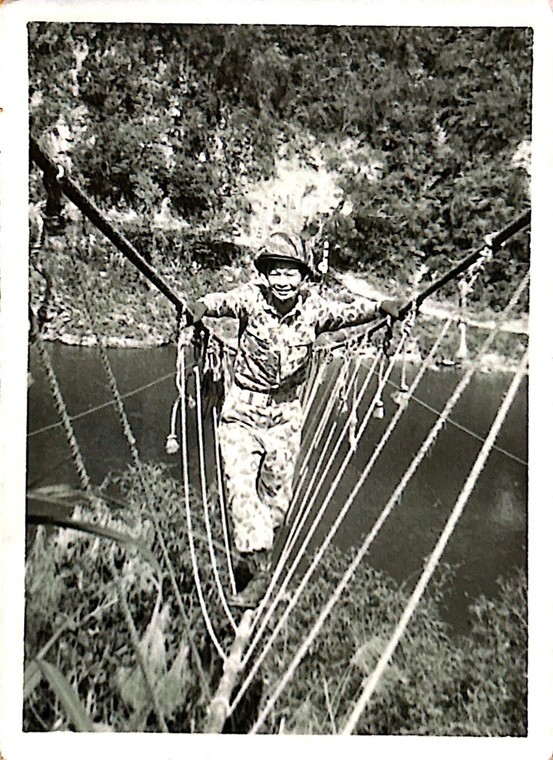
Chi Wen-Hao moved with the troops to Shiding for mountain training, filmed at Lùyú Tán.
On the eve of his discharge, Chi Wen-Hao continuously received temporary education summons, delaying the time he would truly enter society. With only six months left until his discharge, he finally faced reality: without connections or funding, all he could rely on was himself.
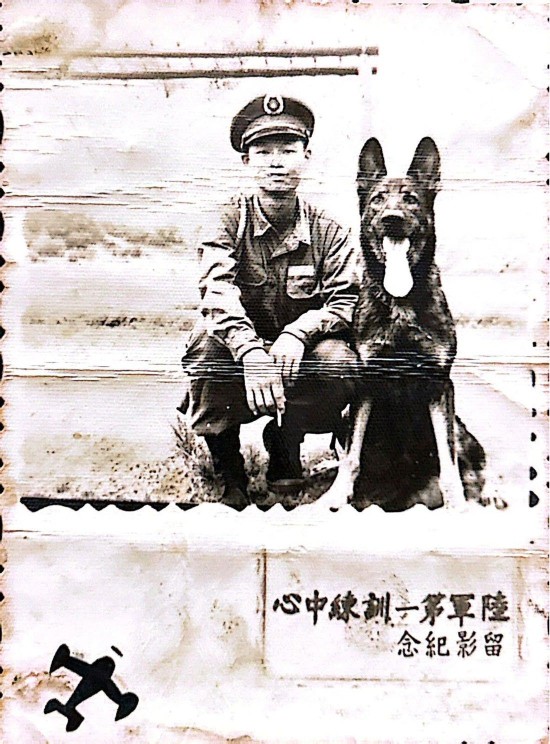
Chi Wen-Hao took a commemorative photo in uniform when he first enlisted.
The Grassroots Salesman
After his discharge, he joined a precision grinding company, starting as a grassroots salesman. He learned processes from his seniors and visited factories on his motorcycle to find orders, frequently facing setbacks in the beginning but never giving up. After three months, he gradually established trust with clients.
Once, while personally operating a machine to handle an urgent job, a grinding wheel exploded and struck his leg; it was a close call that gave him a firsthand understanding of risk and responsibility.
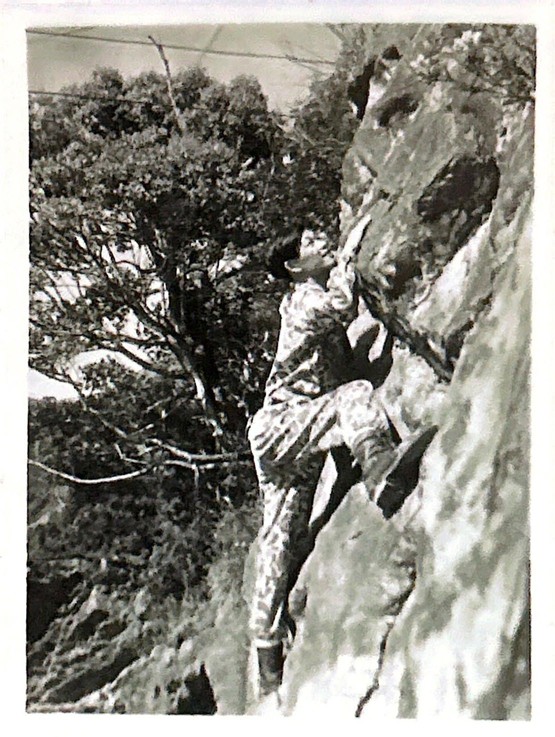
Chi Wen-Hao trained at Xiaogetou Mountain.
Early Entrepreneurship and the Oil Crisis
He later transferred to Guoyang Company, developing new products and markets. Initially struggling with poor performance and immense pressure, he persevered through it all. Although the family business had invited him to join, he chose to decline, preferring to avoid the blending of family ties with work and willing to bear the risks alone.
During his first entrepreneurship, he was low on funds and even had relatives co-sign loans, but he encountered the oil crisis, freezing the market, and ultimately ended the partnership while still obligated to repay debts.
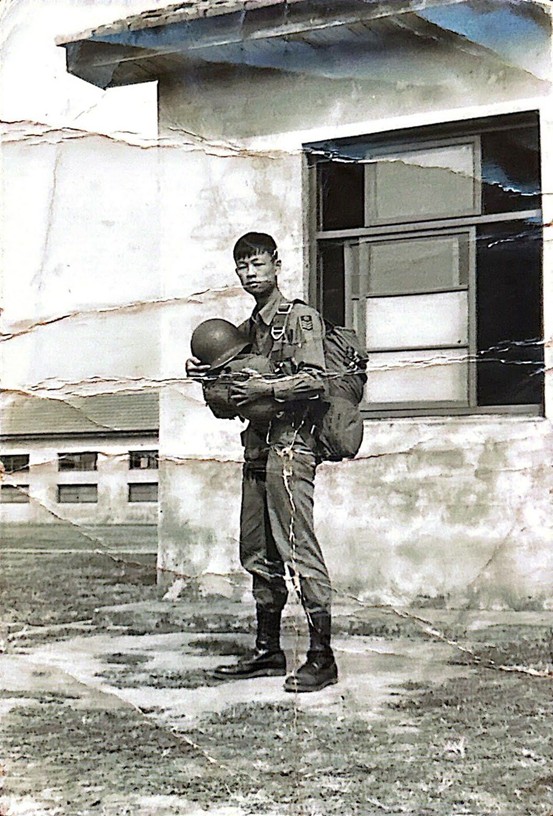
Chi Wen-Hao received special forces parachuting training at Dahu Camp in Pingtung.
The Vespa Years & The Turning Point
After this failure, he re-evaluated his direction and switched to trading printed circuit boards. Although he saw a glimmer of opportunity, changes in customer personnel led to policy shifts that interrupted his progress again. He then ventured into fiberglass bathtub manufacturing, establishing Jin Hao Industries, where he had to relearn everything from processes and quality to personnel management.
At the same time, he joined the Lions Club to broaden his horizons and adjust his mindset. The multiple falls and recoveries allowed Mr. Chi to gradually build strength and resilience, turning his low points into a starting point for further ascent.
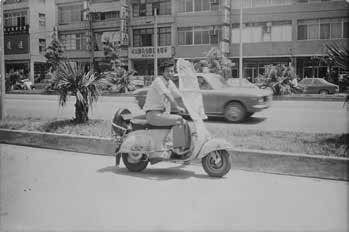
In the early 1970s, during the initial phase of starting a business, Chi Wen-Hao often rode this Vespa motorcycle to make sales.
After a series of setbacks, he ventured into fiberglass bathtub manufacturing, establishing Jin Hao Industries, where he had to relearn everything from processes and quality to personnel management. At the same time, he joined the Lions Club to broaden his horizons and adjust his mindset. The multiple falls and recoveries allowed Mr. Chi to gradually build strength and resilience, turning his low points into a starting point for further ascent.
After his discharge, Mr. Chi Wen-Hao started from being a grassroots salesman. Despite experiencing the harrowing incident of the grinding wheel explosion and the setbacks of his first entrepreneurial venture during the oil crisis, he never gave up on his determination to stand in the business world. He repeatedly experimented in different fields such as printed circuit board trading and fiberglass bathtub manufacturing. Although his efforts were not long-lasting due to external environmental changes and supply chain fluctuations, he also accumulated rich experience in market adaptability. Just when he was searching for a new direction during a low point in his career, the appearance of his childhood friend Chen Ting-Hui brought about a turning point. The two decided to invest in the then-rising roller skate industry, officially starting the growth chapter of "WEVER."